Sunday, September 21, 2008

Obama says No Deal

Okay, someone has finally come to their senses. Obama's announced that he's not necessarily going along with the bailout/buyout plan that Paulsen proposed.

It reads a bit like a negotiation, not a statement of refusal. But at least he's not automatically going along with the plan, as he appeared to be doing on Friday.

See for yourself. Here's his response in its entirety.

The era of greed and irresponsibility on Wall Street and in Washington has led to a financial crisis as profound as any we have faced since the Great Depression.

But regardless of how we got here, the circumstances we face require decisive action because the jobs, savings, and economic security of millions of Americans are now at risk.

We must work quickly in a bipartisan fashion to resolve this crisis and restore our financial sector so capital is flowing again and we can avert an even broader economic catastrophe. We also should recognize that economic recovery requires that we act, not just to address the crisis on Wall Street, but also the crisis on Main Street and around kitchen tables across America.

But thus far, the Administration has only offered a concept with a staggering price tag, not a plan.

Even if the Treasury recovers some or most of its investment over time, this initial outlay of up to $700 billion is sobering. And in return for their support, the American people must be assured that the deal reflects some basic principles.

• No blank check. If we grant the Treasury broad authority to address the immediate crisis, we must insist on independent accountability and oversight. Given the breach of trust we have seen and the magnitude of the taxpayer money involved, there can be no blank check.

• Rescue requires mutual responsibility. As taxpayers are asked to take extraordinary steps to protect our financial system, it is only appropriate to expect those institutions that benefit to help protect American homeowners and the American economy. We cannot underwrite continued irresponsibility, where CEOs cash in and our regulators look the other way. We cannot abet and reward the unconscionable practices that triggered this crisis. We have to end them.

• Taxpayers should be protected. This should not be a handout to Wall Street. It should be structured in a way that maximizes the ability of taxpayers to recoup their investment. Going forward, we need to make sure that the institutions that benefit from financial insurance also bear the cost of that insurance.

• Help homeowners stay in their homes. This crisis started with homeowners and they bear the brunt of the nearly unprecedented collapse in housing prices. We cannot have a plan for Wall Street banks that does not help homeowners stay in their homes and help distressed communities.

• A global response. As I said on Friday, this is a global financial crisis and it requires a global solution. The United States must lead, but we must also insist that other nations, who have a huge stake in the outcome, join us in helping to secure the financial markets.

• Main Street, not just Wall Street. The American people need to know that we feel as great a sense of urgency about the emergency on Main Street as we do the emergency on Wall Street. That is why I call on Senator McCain, President Bush, Republicans and Democrats to join me in supporting an emergency economic plan for working families – a plan that would help folks cope with rising gas and food prices, save one million jobs through rebuilding our schools and roads, help states and cities avoid painful budget cuts and tax increases, help homeowners stay in their homes, and provide retooling assistance to help ensure that the fuel-efficient cars of the future are built in America.

• Build a regulatory structure for the 21st Century. While there is not time in a week to remake our regulatory structure to prevent abuses in the future, we should commit ourselves to the kind of reforms I have been advocating for several years. We need new rules of the road for the 21st Century economy, together with the means and willingness to enforce them.

The bottom line is that we must change the economic policies that led us down this dangerous path in the first place. For the last eight years, we’ve had an “on your own-anything goes” philosophy in Washington and on Wall Street that lavished tax cuts on the wealthy and big corporations; that viewed even common-sense regulation and oversight as unwise and unnecessary; and that shredded consumer protections and loosened the rules of the road. Ordinary Americans are now paying the price. The events of this week have rendered a final verdict on that failed philosophy, and it is a philosophy I will end as President of the United States,” said Senator Barack Obama.

Saturday, September 20, 2008

No Deal


You might not be hearing about it yet, but there's an insurgency building against this bailout plan for the financial industry. People aren't just uncomfortable with the proposed $500 billion $700 billion buyout. They're deeply and righteously pissed.

Cenk Uygur
...when the American people find out what's been done here, they are going to be livid. Conservatives, liberals, moderates, everyone. Why should we have to pay a trillion dollars of our own money to save the asses of bankers who already made a killing from these loans? Now, they get to unload all of their "toxic assets," as Paulson is calling it, on us. Who in their right mind would support that?

Wall Street is ecstatic. The market is through the roof right now because they can't believe they got such a good deal. Understand this is not an isolated bailout here and there. The Treasury Secretary just said he is going to take ALL of their bad loans off their hands. Why wouldn't they be elated?

Glenn Greenwald
The way it works is that Bush officials decree how things will be, and then everyone -- from Congressional Democrats to the Serious Pundits -- jump uncritically and obediently on board, even if they were on board with the complete opposite approach just days earlier, and then all real dissent vanishes. That's how the country in general works. As Atrios says: "We've seen this game played before." I don't pretend to know anywhere near enough -- in terms of either raw information or expertise -- in order to opine on the necessity or lack thereof of The Latest Plan in terms of whether the alternatives are worse. But what I do know is that an injustice so grave and extreme that it defies words is taking place; that the greatest beneficiaries are those who are most culpable; and that the same hopelessly broken and deeply rotted institutions and elite class that gave rise to all of this (and so much more) are the very ones that are -- yet again -- being blindly entrusted to solve this.
Paul Krugman

I hate to say this, but looking at the plan as leaked, I have to say no deal. Not unless Treasury explains, very clearly, why this is supposed to work, other than through having taxpayers pay premium prices for lousy assets.

As I posted earlier today, it seems all too likely that a “fair price” for mortgage-related assets will still leave much of the financial sector in trouble. And there’s nothing at all in the draft that says what happens next; although I do notice that there’s nothing in the plan requiring Treasury to pay a fair market price. So is the plan to pay premium prices to the most troubled institutions? Or is the hope that restoring liquidity will magically make the problem go away?

Emptywheel

But here's all you need to know. Hank Paulson is asking for $700,000,000,000. That's $2,333 from every man, woman, and child in the United States.

In exchange for that money, Paulson is unwilling to accept any demands to make markets more transparent, limit executive compensation, or assist homeowners fighting foreclosure. The sole purpose of that $700,000,000,000 is to bail out Wall Street and only Wall Street, but not to fix it, or our larger economy.

He is asking to be absolutely unbound by any law when he spends that money.

Something stinks. Obama's going along with the plan. McCain's going along with it. Intelligent Democrats and Republicans - people who should know better - are buying into the "this is the only thing we can do" panic talk. Something is very wrong here, and we should all be very nervous about an action this large happening this quickly.

I don't propose to know all the answers. But you don't need to be a weatherman to know when your roof blows off. If you're not outraged, you're not paying attention.


Here's the questions to ask yourself: who does this help? Who does this relief plan leave out in the cold?

And if this doesn't work, what's the next move? Mark my words - this is not going to bring the economic crisis to a sudden stop. More steps will be needed. If this doesn't work, what's the next step?

Thursday, September 18, 2008

Adrian Belew-Oh Daddy

My friend Nancy is hurting today. It's the first birthday she's celebrated since her dad passed away.

I promised I'd post some stuff to make her smile, so here's my first try. It's also the goofiest song I know about being a dad. Hope it helps, Nancy.

Wednesday, September 17, 2008

A Musical Weekend

Sunday was the 10th Anniversary of the opening of Benaroya Hall. To celebrate, they had an entire day of musical performances all over downtown Seattle. We went down for a few hours.

These guys were the first performance we saw, and I think they were the highlight for Oliver. This video captures some of the energy of the group, but if you live in Seattle, go to a Seahawks game or find somewhere to see them live.


They had demonstrations of various instruments, so he got to play a violin and a cello. He was scared of the horns, though, so he watched his daddy try to play a trumpet and a trombone.

We also saw the Cascade Symphony perform in Benaroya Hall and caught a few other small performances. There was a band (the Raggedy Anns) playing inside the Seattle Art Museumn that got Oliver all revved up. He started running around and jumping around like a maniac. Clearly the boy knows good music when he hears it.

Thursday, September 11, 2008

ACORN in Chaos

“Why are they still negotiating with Wade Rathke? Why are the people on staff who knew about this embezzlement still on the staff?”- Coya Mobley, ACORN Board Member

Two members of ACORN's board just filed a whistleblower lawsuit against the organization, seeking to remove Wade Rathke completely from the organization and to have financial documents related to the organization released.

Apparently, after Rathke left his position as "chief organizer" of the organization, he went to work with ACORN International, which is a separate organization that just happens to share office space with ACORN. Mr. Rathke has allegedly been making a bit of a nuisance of himself, walking into the offices of the organization he left in pieces and attempting to talk to the employees. They've asked him to stop.

“Mr. Rathke stubbornly refuses to do that, so he sort of haunts that office, tries to talk to folks doing their work,” according to Bertha Lewis, the interim chief organizer.

Rathke's huffy response isn't going to win him any friends. “I was with the organization for 38 years, and there are many people I hired and supervised, and I have great relationships with them. I haven’t been involved in supervising them. Are they saying that simply because I breathe, I exist, they have a problem?”

No, stupid. It's because you can't let go. You utterly failed the organization you created, and they have asked you to leave. It's one of the fundamental rules of community organizing. When the community asks you to leave, you find the door. You don't whine, you don't complain, you don't pout. You don't keep dropping in to see how things are doing. You get the hell out. It's time for Wade Rathke to find the door.

ACORN's lack of transparency, and Rathke's inability to honor boundaries, are only going to prolong this disastrous scandal in the public eye. The lawsuit is a reaction to bad behavior. The best way to make this thing go away is to act honorably, openly, and swiftly, and they aren't doing any of that so far.

Sunday, September 07, 2008

A Sunday Scene

"Look at what you did. You just peed your pants! You lied to me!"

One moment, he was happily building a sand castle, planting a flag made of seaweed and driftwood in the turret. He was just another kid. And then, in an instant, everything changed.

He wasn't quite six. I knew that because the man - his father? stepfather? - shouted it loud enough for everyone to hear. "He's not a baby anymore! He's almost six - five and three-quarters - and he shouldn't be doing this anymore!"

He was just a boy who had an accident. But the man didn't see it that way. It was an act of vengeance, of defiance. "I went to the bathroom, and I asked you if you needed to go. You said you didn't need to go. Why did you lie to me?!"

The boy sobbed, shouted that he still didn't need to go, while urine dripped down the crotch of his pants. They exchanged insults. "Let me go, you big stupid head!" the boy growled. They seethed at each other as if they had had this same fight a hundred times before.

He had a hold on the boy's arm. The boy tried to go back to his sand castle, back to the sand and seaweed. The boy either took a swing at him or his accuser thought he did. "Are you trying to hit me? Did you try to hit me?"

The shouts got louder. The boy's insults sounded feeble, and to write them out would make them seem childish and funny. They weren't funny. They were the sound of a boy who was accustomed to being abused. This was a boy who was used to spankings, and maybe worse. He was used to fighting back against abuse, however futilely, using the methods that had been used against him. He struck out. He shouted names. He used sarcastic insults.

But he was a boy, not even six, and finally he just kept sobbing while the man berated him.

He never hit the kid while we were there. By that, I mean he never slapped him across the face, never pushed him down in the sand, never took off his belt. At some point, the boy turned his back on the man and the man swatted him on his behind a few times.

The boy asked him why he was being spanked, and the man smugly said, "that wasn't a spanking." So there were different levels of violence in the house. There were spankings, and there was just hitting your kid for the sake of hitting him.

Everything about it was wrong - the tone in the man's voice, the rage in that little boy's voice, the way his mother sat idly through the entire scene, only offering a feeble attempt at compromise once. We left sickened, grateful that Oliver had been out of earshot for most of the confrontation.

Thursday, September 04, 2008

The Organizers Strike Back

Note: thanks to Jaime Mulligan, whom I have never met, for the awesome picture.


"And since our opponents in this presidential election seem to look down on that experience, let me explain to them what the job involves. I guess a small-town mayor is sort of like a 'community organizer,' except that you have actual responsibilities." - Sarah Palin

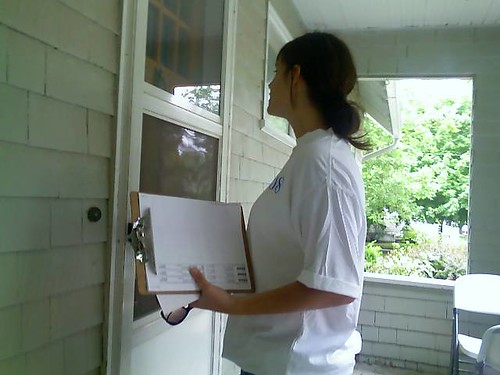
Yeah, I'm still stuck on that one line. Because it pissed me off, friends and neighbors. Because it was a cheap shot at every organizer in the country. Everyone who's ever held a clipboard on a street corner, everyone who's ever knocked on the door of a stranger, everyone who's ever invited someone to a rally or a community event. Sarah Palin just spat in the faces of every single one of those people.

She attacked us.

And it wasn't just Palin who attacked us. Rudy Giuliani took a swing at community organizers. So did George Pataki.

Here's the truth, folks. Cesar Chavez was a community organizer. Ralph Nader was a community organizer. Martin Luther King Jr. was a community organizer. Mahatma Gandhi was a community organizer. Susan B. Anthony. Lech Walesa. Vaclav Havel. Aung San Suu Kyi.

But what about the other side? Gary Bauer and Pat Robertson were community organizers when they created the Christian Coalition. Focus on the Family's James Dobson, whether you like him or not, is doing community organizing. Hell, even Rush Limbaugh has a bit of community organizing to him. Change happens in this country and in this world because community organizers - on the left and on the right - are doing the hard, frustrating, thankless work they do. And Sarah Palin and her Republican buddies think we're all worthless.

Now, I could go on and on, but I'm not the only one who's offended by this. Some big names have joined the chorus of outrage against this cheap shot.

When Sarah Palin demeaned community organizing, she didn't attack another candidate. She attacked an American tradition --- one that has helped everyday Americans engage with the political process and make a difference in their lives and the lives of their neighbors.

All across the country, in every state and every community, there are community organizers helping people find shared solutions to the shared problems they face. The candidates for President and Vice President should be working to solve our shared problems, too, rather than attack others who are trying to do the same. - Deepak Bhargava, Executive Director of the Center for Center for Community Change

Contrary to Palin’s disparaging remarks, organizers have major responsibilities for creating policy changes. Feeding the hungry and housing the homeless are clearly responsibilities of people of faith. We do that by providing food and shelter and more importantly, by organizing to address the causes of injustice and inequity which lead to hunger and homelessness. - Kim Bobo, Executive Director of Interfaith Worker Justice and the co-author of “Organizing for Social Change"

Politicians should thank community organizers, not insult them. As a longtime organizer, I’ve seen time and time again the we are the ones who make government work for the poor, the powerless and the marginalized. Politicians’ policies and promises would amount to nothing without grassroots activists to hold them accountable. We are leaders of faith and stewards of democracy. In a time when the face of faith in politics is often ugly, community organizing is a valuable example faith’s positive role in public life.- Pastor Mark Diemer, senior pastor of Grace of God Lutheran Church in Columbus, Ohio and a DART community organizer.

These groups, and the millions of individuals they represent, are dismayed by the recent dismissal of their efforts in the form of political attacks. Community organizations have been at the heart of every major reform in modern history – from the Boston Tea Party to the civil rights movement for example, the quest for civil rights began when community organizers mobilized the disenfranchised. - USAction

ACORN members, leaders and staff are extremely disappointed that Republican leaders would make such condescending attacks on the great work community organizers accomplish in cities throughout this country. The fact that they marginalize our success in empowering low- and moderate-income people to improve their communities further illustrates their lack of touch with ordinary people. Every great movement in the history of the world has community organizing. - Maude Hurd, President, ACORN

(Note: I know I talk a lot of smack about ACORN, but they're doing good work and I've said that over and over again. And the fact that they underpay their community organizers doesn't change the fact that they're doing righteous work.)

This is just a sampling. More responses can be found here and here. And also, you must read this Kos diary.

Don't piss off community organizers. There are a hell of a lot of us, and we're proud. We work damn hard to make the change that happens in this world, and none of us are going to stand still while someone uses for a political punching bag.

Oh, and also this: community organizers don't just know how to use a rapid response network. We run the rapid response networks. We run the phone trees. We're activists. We're hellraisers. Don't pick a fight with people who fight for a living.

The Meaning of Community Organizing

I was going to post a long response to Sarah Palin's nasty remark yesterday. I was a community organizer for years, you see, and I resent being accused of having a meaningless job.

I may still write that long response. But for now, I thought I'd let our organizer-in-chief respond himself. This video was posted about five months ago, and seems more appropriate now than ever.

Wednesday, September 03, 2008

Democrats Don't Attack Working Mothers


Look, there are a hundred reasons to oppose Sarah Palin's nomination. One is that she was nominated by John McCain, who is a frightening prospect for president.

Her astonishing lack of qualifications. The lies about the Bridge to Nowhere. The lies about her connections with Ted Stevens. Her near-impeachment as mayor of Wasilla. The firing of the head of public safety for personal reasons. The earmarks she got to benefit her small town. The fact that she fought to keep polar bears off the endangered species list.

Lots of valid, political, meaningful reasons to oppose her nomination.

The fact that Sarah Palin is a working mother is not a reason to oppose her nomination. Mean-spirited attacks like Sally Quinn's piece are not going to help our case at all.
Is she prepared for the all-consuming nature of the job? She is the mother of five children, one of them a four-month-old with Down Syndrome. Her first priority has to be her children. When the phone rings at three in the morning and one of her children is really sick what choice will she make? I'm the mother of only one child, a special needs child who is grown now. I know how much of my time and energy I devoted to his care. He always had to be my first priority. Of course women can be good mothers and have careers at the same time. I've done both. Yes, other women in public office have children. House Speaker Nancy Pelosi has five children, but she didn't get heavily involved in politics until they were older. A mother's role is different from a father's.
Mrs. B is a working mother. Do we really want to start attacking mothers for working outside the home? Take away the number of kids, the concerns about the kid with Down's Syndrome. This is an attack on working mothers.

And it's also an attack on fathers, incidentally. I was a stay-at-home dad for nearly a year of Oliver's life. He was still nursing when Mrs. B went back to work. I fed him bottles of breast milk. I put him to bed. I took care of him. He survived. A mother's role is different from a father's, true, but if Palin's husband is the chief caregiver in the family, there is no shame and no harm in that. And shame on Sally Quinn for insinuating otherwise.

We are attacking our own best interests as progressives and as Democrats when we attack Sarah Palin for daring to work while raise children. Let's get back to the issues at hand and not get distracted by the circumstances of her family. We're better than this.

I wouldn't be a bit surprised if Sarah Palin's place on the ticket didn't last the week. If/when she resigns her position as vice-presidential candidate, she will blame the Democrats for attacking her and her daughter. She will accuse us of trying to destroy her and her family, and she will say that the Democratic party is anti-working woman and anti-family. Sally Quinn's piece feeds into that argument. Every time a progressive gleefully talks about what a terrible mother Sarah Palin must be, they feed into that argument.

We're better than this.

Tuesday, September 02, 2008

Diddy on Sarah Palin

I don't think enough people have been asking themselves this question: "what does Diddy think about John McCain's choice for vice president, Sarah Palin?"

But apparently someone asked him, because here's his response.

Note: I do not necessarily endorse the views of Diddy, nor do I endorse his tilt-a-whirl camera work. There's some questionable language in this video, so don't watch it with your kids.

Thursday, August 28, 2008

Barack Obama, My Candidate


Barack Obama is just eight years older than me. He is of my generation - the generation that missed the sixties, the generation that grew up under the specter of the Cold War and Richard Nixon and Ronald Reagan. He is my candidate, the first candidate with whom I could truly emphasize.

I loved his speech tonight, but two parts in particular jumped out at me. He built a strong case for the power of government - yes, the federal government itself. The big bad bureaucracy. Like me, Obama believes that government is not only necessary, but is in fact the proper mechanism to tackle society's problems. Like me, he believes that government at its best works on our behalf and in line with our best instincts.
What is that American promise? It's a promise that says each of us has the freedom to make of our own lives what we will, but that we also have obligations to treat each other with dignity and respect.

It's a promise that says the market should reward drive and innovation and generate growth, but that businesses should live up to their responsibilities to create American jobs, to look out for American workers, and play by the rules of the road.

Ours is a promise that says government cannot solve all our problems, but what it should do is that which we cannot do for ourselves: protect us from harm and provide every child a decent education; keep our water clean and our toys safe; invest in new schools, and new roads, and science, and technology.

Our government should work for us, not against us. It should help us, not hurt us. It should ensure opportunity not just for those with the most money and influence, but for every American who's willing to work.

That's the promise of America, the idea that we are responsible for ourselves, but that we also rise or fall as one nation, the fundamental belief that I am my brother's keeper, I am my sister's keeper.

That's the promise we need to keep. That's the change we need right now.

He also recognizes that not everybody believes him. He spoke directly tonight to the people who have given up on politics, on government, and maybe they've even given up on him. And he pointed out how that apathy was far from benign - that ignoring politics would merely let the bastards keep doing what they've been doing. Obama as just another politicians, in an effort to get them to sit out the election. He called on the sideline-sitters and the cynics to stand up and get involved.

I know there are those who dismiss such beliefs as happy talk. They claim that our insistence on something larger, something firmer, and more honest in our public life is just a Trojan horse for higher taxes and the abandonment of traditional values.

And that's to be expected, because if you don't have any fresh ideas, then you use stale tactics to scare voters. If you don't have a record to run on, then you paint your opponent as someone people should run from. You make a big election about small things.

And you know what? It's worked before, because it feeds into the cynicism we all have about government. When Washington doesn't work, all its promises seem empty. If your hopes have been dashed again and again, then it's best to stop hoping and settle for what you already know. I get it.

He does get it.

Tonight confirmed everything I was hoping about Obama. He's not just resting on his laurels and his 80,000-strong rockstar receptions. He's ready to fight for this election, ready to fight McCain toe to toe and call him out on every lie and deception. He can deliver the soaring rhetoric and take roundhouse swings at McCain at the same time.

More reassuring to me was hearing that Obama believes what I believe about government. I won't agree with him on every decision, but I'm relieved to hear that he has the same understanding that I do of the role of government. Our finest presidents - Franklin Roosevelt, Kennedy, Lyndon Johnson - have used the power of the federal government to attack the deepest problems of society. Obama's not running from the legacy of the "New Deal" Democratic party - he's proud to be a member of that party. And I'm proud to be a part of his party.

Wednesday, August 27, 2008

Hurricane Gustav - the Wrath of God?


Sestak on DailyKos:

For months, all you heard was that the only chance for a Republican victory in November would be through an act of God. Conservative Evangelicals prayed for it to rain on Barack Obama's parade. They prayed that it would rain in Denver, Colorado on Thursday night when Barack Obama accepts the nomination to be the candidate of the Democratic Party for President of these United States. God didn't just refuse their selfish and misguided pleas; He struck them with a vengeance for their insolence.

As we speak, the planners of the Republican National Convention are holding emergency talks right now. I'm not kidding. Ya see, there's an anger brewing south of here. A storm of rage called "Gustav" with his one eye set upon the Gulf of Mexico, looking past the offshore oil rigs and towards the Gulf states. Does God want property and lives to be destroyed? No. Is God sending a message to those who dared to misuse His name? Perhaps.


(And lest I be misunderstood, let me make this crystal clear. I don't want this hurricane to hit land anywhere. I do not, for the love of God, want another Katrina-esque situation in New Orleans or anywhere around the Gulf Coast. I'm just sharing one Kossack's perspective, that's all.)

Tuesday, August 26, 2008

Thank You, Hillary Clinton


Hillary knocked it out of the park tonight. She had a thankless task - bringing her supporters over to Obama's side without demeaning them or her own candidacy. She managed to pull it off beautifully, with some vicious shots at McCain in the process.

This was the best speech by Senator Clinton I've ever seen.

There will be lots of analysis of this tomorrow - matter of fact, some of it is already up on the web. The New York Times interviews one Hillary delegate who was asked whether she would support Obama.

Her response: “Absolutely–she just told us to, didn’t she?”

There were several liveblogs of her speech, but the funniest one was at Defective Yeti. Go read it. Tell him I sent ya.

Thursday, August 21, 2008

"How Many Homes Do You Own?"


So have you heard the one where the reporter asks John McCain how many houses he owns? And McCain says he doesn't know how many houses he owns?

Seriously. This actually happened.

I'll let my good friend Barack Obama explain how it went down.
"...somebody asked John McCain, how many houses do you have? And he said, I’m not sure. I’ll have to check with my staff. True quote. I’m not sure. I’ll have to check with my staff. So they asked his staff, and he said, at least four. At least four. Now, think about that. I guess if you think that being rich means you’ve got to make $5 million and if you don’t know how many houses you have, then it’s not surprising that you might think the economy was fundamentally strong. But if you’re like me, and you’ve got one house, or you are like the millions of people who are struggling right now to keep up with their mortgage so they don’t lose their home, you might have a different perspective. And by the way, the answer is John McCain has seven homes."

Here's the video of Obama's response.

Here's the audio of McCain actually saying it.

Obama is going to town on this quote, and on McCain's fundamental inability to understand the economy or average Americans. Check out this list of campaign events, all focusing on McCain's bonehead line.

I don't want to just call it a gaffe, because a gaffe implies he said something he didn't mean. John McCain is a wealthy man. He owns more homes than he can keep track of. This isn't a gaffe - it's an accidental admission of his wealth.

I'm hoping this becomes the quote of the year. The "I voted for it before I voted against it" of 2008. Of course, I'll also be happy if he says something stupider than this, but this will work for now.

Ha.

Ha.

Ha.

Monday, August 18, 2008

The Vice President will be ...

So the NY Times is reporting that Obama has selected his vice-presidential pick, and he'll make the announcement soon.

Really soon.

Like, Wednesday.

So, being a pretend internet pundit, I have to get my pick in, so when Obama names my selection, I'll look all brilliant and prescient and insightful.

and so, let me punditize. Allow me to present to you the 2008 vice-presidential nominee for the Democratic party.

Ladies and gentlemen, I give you Brian Schweitzer.


And who dat, you may be asking yourself? Well, let me paste some stuff from Wikipedia tell you everything I know about him.

Brian Schweitzer is the Democratic governor of Montana, a state not exactly known for left-wing politics. Schweitzer served in the Clinton administration and, in 2004, ran for the Senate against incumbent Conrad Burns, and nearly beat him. (51-47.)

He ran for governor after Judy Martz (rhymes with ... um ... um ... Martz) stepped down. As kind of a shocker, he announced that he would be running with a Republican, John Bohlinger, as his lieutenant governor. (apparently, you run on a ticket in Montana.) See how nicely that fits Obama's message of a new kind of politics?

Montana's in the Rocky Mountain West, which is sizing up to be an important region in this election. Schweitzer is a Democrat that appeals to conservatives and independents. He's a non-traditional Democrat like Jon Tester or Jim Webb. Montana is only two states away from Colorado, so he'll get a hero's welcome in Denver.

As proof that I am not just pulling this out of my hat, here's the words of an actual pundit - Sean Q. from fivethirtyeight.com.

The first time I heard Brian Schweitzer speak, I thought: "This guy is going to be President." That is not a common reaction on my part to politicians. I've listened to hundreds and hundreds of Democratic politicians speak, and I've only had that reaction twice in my lifetime. The first was Barack Obama, the second was Brian Schweitzer.

People have asked me what it was that made me feel so strongly in reaction, and the way I'd put it now is that Brian Schweitzer and Barack Obama are the two "new Democrat" styles that are extremely effective in the post-Clinton era. Both emphasize solutions over partisanship. Both are suspected by Republicans of talking a good game of bipartisanship and hewing to traditional Democratic Party ideology. Both are great communicators, but with different rhetorical strengths. Obama rose from an mainly urban and intellectual background; Schweitzer's breakthrough is probably the single best example of why the Democrats chose Denver as the convention site this year.
So will it happen? I dunno. Probably not. But he's my pick. Brian Schweitzer. Write it down.

More ACORN Fallout


“Does Drummond know the word is out? If not, shouldn’t someone tell him?”

I'm going to do something I have never done. I'm reposting an entire blog entry from someone who is not me. The author is one Drummond Pike. He maintained a blog on the Tides Foundation website - a blog that has since been scrubbed from the internet. (I copied the cached page from a Google search in order to recreate this blog post.) Keep reading to find out why Mr. Pike might have wanted to hide this particular entry.


Time to Step Aside
Author: Drummond Pike
Source: Notes from the Left Coast
http://drummondpike.tides.org/index.php/2008/06/25/saultime-to-step-aside/


Wade Rathke has done something some would never have predicted. Resigned as ACORN’s Chief Organizer. Who ever would have imagined?

I met Wade in 1972, as best I can recall. Marge Tabankin and I were running the Youth Project (she was my boss) and had developed a bit of a competition to find the most impressive new organizers “out there.” The YP, begun in the Center for Community Change’s basement, was an operation to leverage foundation $$ into community organizing that involved young people – an attempt to bring the national movements of the day down into the everyday lives of disenfranchised communities. I came up with Mike Miller from Organize, Inc. in SF – a skilled, talented follower of Saul Alinsky’s Industrial Areas Foundation approach: parish based, working class organizing. Alinsky had defined the field in many ways and his Rules for Radicals was found on the shelves of an entire college generation at the time. Margie’s choice was this kid named Wade Rathke.

Rathke was this ornery, young red head in Little Rock, Arkansas that was a couple of years into what would become ACORN as we know it today. He’d dropped out of Williams College to work with the anti-draft movement, but ended up working with George Wiley on the National Welfare Rights Organization. He built an edgy, confrontational group in Springfield, MA and learned on the job how to push for a better break for welfare mothers. His yearning to return to the south led him to convince Wiley to back his hair-brained scheme to build a new kind of organization that expanded the range – low AND moderate income folks, but stretched organizationally beyond one city into a statewide, and ultimately national, approach where there were more levers of power.

So, when I showed up in Little Rock on that hot, humid day in 1972, I found something I hadn’t expected. New thinking, new ambition, new methods. Later, on a whim, I invited Wade up to train some organizers in Montana at the Northern Plains Resource Council. What I saw then truly convinced me that this was a special person – able to find common ground between welfare moms in Springfield, aggrieved neighbors displaced by a freeway being built through their Little Rock neighborhood, and land-rich ranchers in eastern Montana fighting coal strip-mining. What they all faced was an imbalance of power, and they were swimming upstream. He imparted wisdom, practical advice on strategy and tactics, and an invitation to think of themselves in a larger context.

I was deeply impressed, and when I started up Tides several years later, he was my first call to recruit for the Board. Over the 32 ensuing years, he’s been a font of wisdom and advice on how to build an organization. I’ve felt often as though I were sitting at the foot of a master, and I think I was. He built ACORN on the premise that old models were meant to be challenged, and that’s something we at Tides have absorbed as well.

Later, when he started what became Local 100 of the SEIU, he pulled off a similar “defying gravity” move: he started a new union in a “right-to-work” state whose laws were extremely hostile to any effort to organize workers. Once again turning convention on its head, he figured out that workers consigned to minimum wage jobs had issues, an instinct to make their efforts collective, and a willingness to give the intense Rathke a chance to show them a new way. Now getting contracts signed with employers in right-to-work states is challenging in the extreme, but judging by the hostile monitoring they got during the Bush 1 years, they must have been doing something right.

I am convinced that the light of history will shine on Rathke quite brilliantly. In his 38 years at the helm of ACORN, he achieved what few have ever done working with poor people. He showed them that, through their own devices, and when collected in significant numbers and willing, on occasion, to be “impolite,” they can win real, tangible victories. If you have ever attended a national convention of ACORN, you will know what I mean. And if you ever need testimony, just talk to one of the leaders of ACORN like Maude Hurd and before her, Steve McDonald, or any of the others. 400,000 families are members, and it is hardly surprising to see progressive national candidates for public office come and address the throng. America will never be the same for the ACORN he helped build from scratch.

There is a paragraph in his blog about moving on that talks about the things that didn’t go well. I know about this from my own experience with Tides. You make decisions. You care. You do what you think is right. And, inevitably, some things you get wrong. How we are able to move forward directly depends on how we see the things that don’t go well and whether we learn from them. As Amory Lovins once famously invoked, “Systems without feedback loops are inherently stupid.” You can say the same about organizers and managers. The thing that many who meet Wade in other circumstances may miss is that he has always maintained the most important of feedback loops – those with the members and leaders. The respect he always shows, the deeply human connection between organizer and members he always honors, are incredible to behold.

I once traveled to Peru with Wade during the time leading up to the launching of ACORN Peru, I saw this same deep respect, combined with an understanding of the circumstances in which folks were organizing. I also saw him meet an equal, recognize and respect it, and establish a real understanding about the power of organizing in changing lives. This fellow, pictured on the right, ran an amazing organization that could produce thousands of people on the street on very short notice. I actually believe Wade was a bit jealous!

As Wade so eloquently says, he is moving on to work with “the weak” links in the ACORN network – the international ACORN’s and Local 100 which is recovering still from Katrina. He’s unlikely to call them “weak” in a year. Why? Because he’s our generation’s great organizer.


This post was written June 25, 2008, around the time that Wade Rathke resigned from ACORN. It was intended as a heroic tribute to someone who Pike clearly holds in great esteem. This post looks even more suspicious, given the news that broke today.

Weeks after Mr. Pike wrote this post, the New York Times broke the story that Wade Rathke's brother had imbezzled close to a million dollars from ACORN, and that Wade and a few ACORN insiders had hidden the crime from everyone - investors, supporters, and even several members of the board - for years. (A refresher here.)

In that article, the New York Times reported that the stolen money had been repaid by some anonymous donor - a remarkable gesture by someone who clearly was trying to protect ACORN from further damage.

Today, the Times reported that this donor was one Drummond Pike - the founder and chief executive of the Tides Foundation.

Problems:

  1. Wade Rathke sat on the board of the Tides Foundation. Oh, until very recently. Questions, questions, questions.
  2. Pike has not confirmed that he paid the debt - although it has been confirmed by other sources - and it is still unclear whether he paid it with his own money or Tides money. His succinct response was, “As a rule, I do not comment on my personal finances.” If it turns out he did this with Tides money and not his own money, this is going to erupt into a full-blown disaster.
  3. The Tides Foundation gave grants to ACORN on numerous occasions. Pike was one of a handful of insiders - including Rathke - who knew about this scandal and did nothing until the Times broke the story. There is now reason to question not only Mr. Rathke's behavior and judgment, but also Mr. Pike's leadership re: his foundation.
  4. The Tides Foundation is one of the most important funder of social justice work. Tides funds innumerable nonprofit organizations. If it turns out Tides money was used to repay this debt, every organization that ever received Tides money will now be tied to the ACORN scandal, thanks to Mr. Pike's actions.
  5. I can guaran-damn-tee you that few, if any, donors to the Tides Foundation knew about this behind-the-scenes deal. If it were me, I sure would want a say in whether my money was being used to cover up a crime. (Again, assuming that Tides money went to pay the debt.)
In retrospect, it looks like Pike's farewell letter to Rathke is just part of the coverup. He knew something was dirty in Rathke's sudden resignation, and yet he still wrote this piece that made Rathke look like some magnificent combination of Horatio Alger and Martin Luther King.

Far from being over, the ripples of this scandal are just beginning.

This is the part that sticks with me. I wonder if Pike was commenting on his own behavior when he wrote these words, or if it was meant sincerely at the time. Regardless, these words are going to come back to haunt him.

You make decisions. You care. You do what you think is right. And, inevitably, some things you get wrong. How we are able to move forward directly depends on how we see the things that don’t go well and whether we learn from them.

Friday, August 08, 2008

John Edwards

Many of my longtime readers know that I supported John Edwards' candidacy.

When I heard the rumors last year, and again a few weeks ago, I thought that it was baloney. I didn't deny that Edwards was capable of an affair - he's a good-looking, wealthy guy with a high profile and a strong opinion of himself. However, his relationship with his wife seemed rock-solid, and the evidence from the Enquirer seemed suspect. There were no photographs. There was no hard proof. And after all, it was a supermarket tabloid. I chose to ignore the rumors.

I don't know yet how I think about the confession by Edwards of his affair - his short-term affair that he says ended two years ago. I don't care, frankly, to know how long it went on, how it ended, how many times they slept together. None of it is my business.

He has spoken out and so has his wife. I bear both of their statements in mind.

John Edwards Statement

Elizabeth Edwards Statement

However, I cared about this man and I committed myself to his presidency. I was moved by his support of poverty issues, by his highlighting of issues being ignored by most other candidates. I would have willingly followed him all the way to the convention, and then to the White House.

Who knows when this would have surfaced if he had become the frontrunner instead of Obama? In New Hampshire? In Nevada? Before the nomination? Who knows, if he had become the candidate, what would have happened to his candidacy if this story had broken in September or October?

Edwards made a foolish mistake, as millions of men and women have also made. But he was running for president with this in his back pocket. He ended the affair - he announced his candidacy on December 28, 2006. He lied about this affair for nearly a year - beginning in October of last year - knowing that it was true. His wife knew the truth, but he strung the rest of us along for his entire candidacy and beyond. We believed in him, and when he said the rumors were bunk, we believed him because we believed in him. We were lied to, all of us. I cannot just let this go. I cannot reconcile this with platitudes about his privacy or about the fallibility of the human condition.

He lied to me, and the National Enquirer had to bring the news that he was a liar. Thank you very much, John.

Sure, it never should have become public. Sure. Sure, he deserves his privacy. But goddammit, he knew this was going to come back and bite him eventually. He's a public figure, and things like this do not just go away. (And if he wanted it to go away, what the hell was he doing visiting this woman in July 2008? He says he ended the affair in 2006 - why was he still visiting her last month?)

I don't know who I'm angriest with - the press or John Edwards. But Meteor Blades wrote a white-hot post on Kos that stuck with me.

You knew when you declared for the presidency that this affair hung over you, that it might easily come to light. That it could, had you gained the nomination, have wrecked the party’s chances for winning the White House, tamped down support for Democrats running for seats in Congress, and set progressives back a decade. You knew that when you kept your name in the hopper for the vice presidency.

But you kept running anyway. You lied. And you got others to lie for you. You did this knowing full well the damage that could be done, not to your marriage, but to the party and the aspirations for better governance of those who looked to you as a leader who could help bring it about.

Your populist message was and is a crucial one, the source of much of your support, the reason that many of us backed you even though your past record on an array of issues, including Iraq, gave us pause. We gave you credit for changing your mind. Your speaking out for the needs of a sector of the population previously ignored by other candidates created a powerful and loyal constituency.

You have made it clear that you cared more about yourself than about that constituency. Than about us. You were willing to take a chance that you would be nominated for the Presidency and that the revelation of this affair would put a Republican in the White House, ironically, a Republican who betrays and mistreats the women in his life, too.

So that's what Meteor thinks.

As I said before, I don't really know what to think about this. What do you think? Tell me where you're at on this. I hate having to talk about this, but we're here, and it's out, so we might as well talk about it.

Monday, July 28, 2008

Bea


Oliver has a baby doll. For the longest time, she was just an occasional toy. He played with her sometimes, but mostly he ignored her. She sat unused for months, collecting dust, just another stuffed thing in the bin of stuffed things. Suddenly, he has fallen madly in love with this doll. He carries her everywhere. He went to bed with her clutched in his arms the last three nights. It's his baby.

Her name is Bea. His name was going to be Beatrice if he was a girl, so Mrs. B took the liberty of naming his baby doll for him. There's something strange about him carrying around something with his alternate-universe female name. It's as if he's holding his other half.

He tells us that she's his baby. That's exactly how he says it - "she's my ba-by," he says somberly. "I wuv her."


I must get this on video, because when he says "she's my baby,"
his voice croaks with emotion. He says it with a combination of unconditional love and existential dread, like he knows that the love he has for Bea is ultimately going to break his heart and destroy him. (I don't really believe that myself, about Bea or about him, but when he says it, you just hear the heartache in his voice.)


She went to the beach with us last week. She went shopping on Sunday and patiently sat in a chair while he tried on shoes. He eats with her. He asks us to get her sippy cups full of milk and water. When we read stories, he insists that we read to both of them. Sometimes, he comes looking for food in the kitchen and he says "we're hungry."

But mostly, it's the endless clutching and looking at her. And he really doesn't look joyfully at her, like he's thrilled to have a baby. He looks honest-to-God mournful. Haunted. Or maybe that's just his way of looking protective and watchful. But he just looks so burdened. It's hard work being a parent, but he's only three yet - he shouldn't know this.

Thursday, July 24, 2008

Elegy for the Bryant Park Project


It's over. It's really over.

Tomorrow - Friday, June 25th - is the last broadcast of the Bryant Park Project.

My friends at Radio Sweethearts decided to put together a mixtape for the BPP crew. It was such a good idea that I stole borrowed it.

So here's my own BPP playlist. It covers all the emotional bases - sadness, anger, depression, shock, and plain' old anger. I tried to post songs or mp3s where I could, videos where I had to. Enjoy.

"The Long Road" - Pearl Jam
And the wind keeps rollin'
And the sky keeps turning grey
And the sun is set
The sun will rise another day
"Song for the Dumped" - Ben Folds Five

Yeah, this is just a FU song. Some bad words in here, but the anger is right on target.

"Top of the World" - Patty Griffin
There's a whole lotta singing that's never gonna be heard...
"My City of Ruins" - Bruce Springsteen

(It's a video link, but it's really worth watching the performance from the Tribute to Heroes.)

"Last Goodbye" - Jeff Buckley

"If Not Now" - Tracy Chapman

This is my first slap-in-the-head song for NPR. Their wooden-headed CEO has said they want radio for the next generation. They had a radio program for the next generation, and they say it wasn't good enough for them. If not now, then when?

"I Just Don't Know What to Do with Myself" - Dusty Springfield

"You Were Meant for Me" - Jewel

"Love is Stronger than Death" - the The

"Lifeline" - Harry Nilsson

"Nothing Compares 2 U" - Sinead O'Connor

"You Oughta Know" - Alanis Morrissette

Another slap in the head for NPR, because you know those boneheads are going to try and cook up another morning-show-for-hipsters that completely misses the point of why the BPP was so great. They're going to have their rebound relationship with another show, and it's gonna suck, and they're going to be left sitting on the curb, head in hands, wondering what went wrong.

"Since U Been Gone" - Kelly Clarkson

"You had your chance, you blew it!"

I believe the end of the BPP is going to be the launch of a few brilliant careers. There were remarkably talented people associated with this show who did some unforgettable work. Matt Martinez, Dan Pashman, Tricia McKinney, Laura Conaway, Ian Chillag, Win Rosenfeld, Caitlin Kenney, and the unstoppable Alison Stewart (not to mention everyone that I'm forgetting) - geniuses. We have not heard the last from this talented crew.

So this last song is a triumphant kiss-off. NPR didn't know what they had, and they have no idea what they're losing. The BPP crew is going to bounce back stronger and better. They're all going to make it. We're all going to make it.

Peace and love to the entire BPP posse. And if you're mourning the loss, too, go to the BPP Diner. You never know who you'll find there.

Tuesday, July 22, 2008

Killing the BPP


So the interim CEO of NPR (they fired the last one) has a blog. And on that blog today, he decided to share his thoughts on the Bryant Park Project. The BPP - who have done everything they can to maintain pressure on NPR to keep them alive - linked to his blog on theirs.

Here's the gist of what he said. A staffer apparently contacted him with the idea of keeping it alive as a web-only project. The short answer is "sorry, no". The long answer is some of the most bewildering business-speak I've had the misfortune to read. It's an infuriating read. Go see for yourself.

We've/I've learned -- or relearned -- a lot in the process. Sustaining a new program of this financial magnitude requires attracting users from each of the platforms we can access. In this case, radio carriage was inadequate and web/podcasting usage was hampered -- here's the relearning part -- by having an appointment program in a medium that doesn't excel in that kind of usage. Web radio is growing very rapidly (much faster than FM did, for example), but it's almost all to music and, increasingly, to attention-tracking music.

Perhaps the future of news on the web is in the same user-programmed direction. I'd like to see good minds like those of the BPP staff think about how we can do good journalism delivered via the web using techniques beyond just throwing up another portal-type web site and expecting people to come to it. Our new open API release is a great tool for that. The realities of how people use the web, how web audiences grow through search, and technologies for tracking attention and tailoring content delivery to match how people spend their attention all need to be considered. Portals still have a place, just as their close cousins radio transmitters do, but we can no longer put all our eggs in that basket.

NPR will, I hope, be a leader in a new generation of news delivery over multiple platforms, including ones we've never conceived. But we can't make those 2nd generation investments if we continue 1st generation efforts that aren't consistent with what we know about how media usage is maturing.

All I learned from his comments were that NPR has no idea what they're doing. They wanted to launch some sort of web/radio hybrid, something for the 21st century radio listener, but they didn't seem to know what they really wanted to do. They want to succeed in the new media age, but didn't realize that the BPP was actually succeeding. They can't identify it as success because they don't know what they're hoping to achieve. Anyway, after his post appeared on the BPP blog, I responded with a fairly long comment. Here's what I wrote:

You can't make those second-generation efforts succeed if you kill off the attempts to create "new media" before giving them a chance to succeed. I can't believe that you would cancel the BPP - a slap in the face to all associated with the project - and then ask its braintrust to come up with ideas on creating online content. They had a brilliant idea, and you've euthanized it.

You suggest that the BPP was an example of "putting all your eggs in one basket". But later in your piece, you demonstrate that you haven't put all of your eggs in one basket: you're podcasting, you've got the new NPR Music website, you've got the API, and you've got the BPP. It seemed to me that the BPP was part of a strategy - not the be-all/end-all of your new media strategy. There must be a way to keep the BPP going in some lower-cost format, since is it your most adventurous and most successful venture in 21st generation media to date.

The comparison to Morning Edition and ATC's audience - even in terms of podcasts - is unfair. Those programs have a thirty-year record, and they are essentially "destination programs." When people are trying to find NPR programs, they look for Morning Edition and All Things Considered. They don't look for News and Notes. They don't look for Tell Me More. They don't look for the BPP. This is a problem of branding and marketing, not of the BPP's quality or content. This is an external problem, not an internal one.

Despite that, the BPP built a passionate audience of a million people - on air, online, on Twitter, on Facebook, on the blog - in less than ten months. Morning Edition has an audience of thirteen million, after thirty years.

BPP is part of the long list of programs on the NPR website, but without some strategic cross-marketing, of course it's not going to succeed. Morning Edition and All Things Considered should be promoting the BPP regularly, in the way that they regularly use stories from programs like Youth Radio and other outside projects. (I can't find a single instance of a BPP story appearing on ATC. Not one.) There needs to be a strategic effort to build cross-brand interest. You don't just send a new project out there to sink or swim - it has to be nurtured and supported, or else it will inevitably fail.